The Election Is Not the Reform
An election can remove a corrupt government. It cannot restore legitimacy without reform.
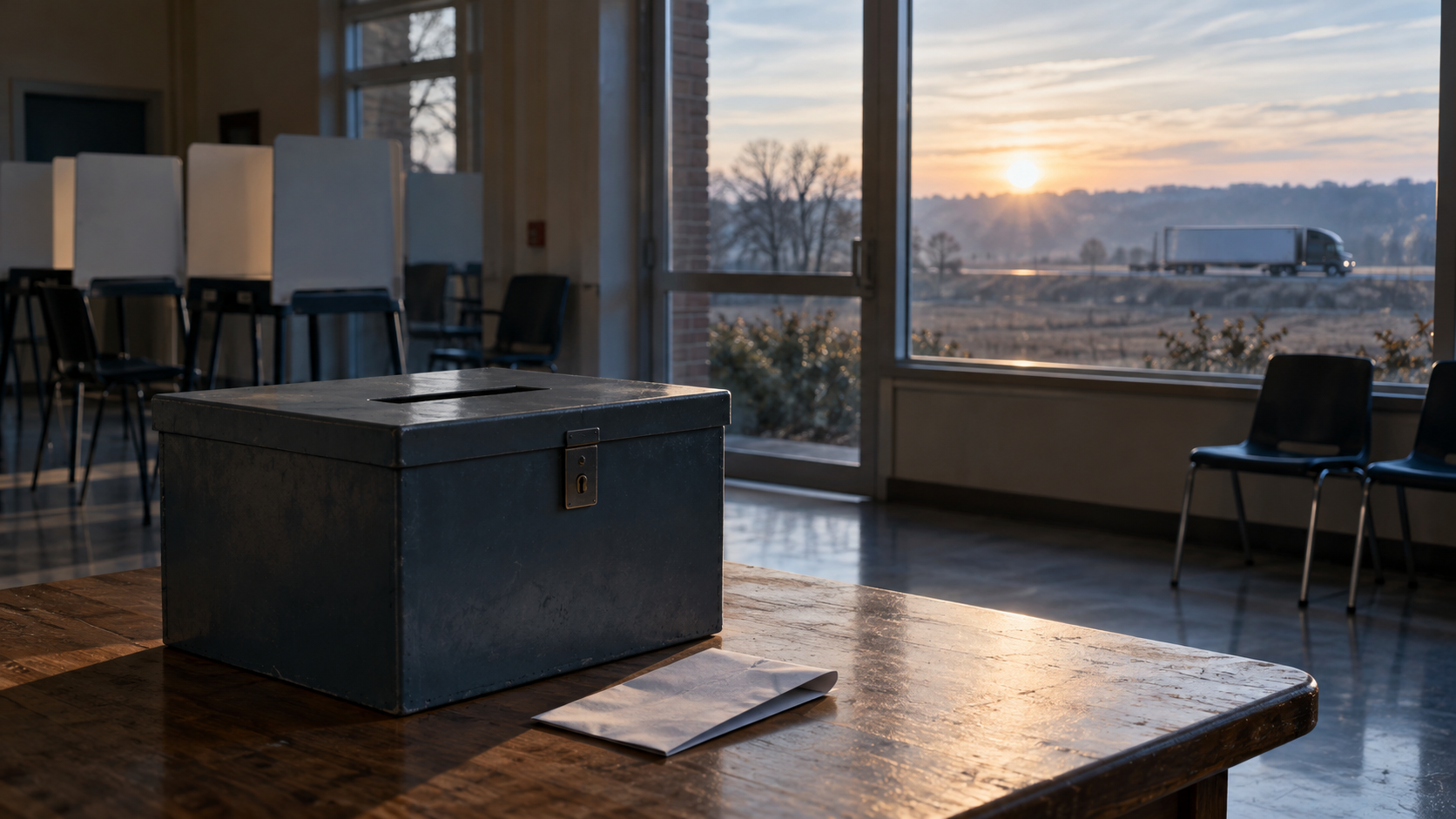
Tomorrow’s election will be about corruption and the collapse of constitutional restraint in the United States. Many Americans will vote to reject a government they believe has abused its power. If the opposing party wins, its leaders may celebrate as if the result settles the argument.
It won’t.
A victory over the current government would not mean Americans trust the political system again. People have watched power change hands while the same machinery remains in place: money shapes campaigns, secrecy shields decisions, and elected officials draw districts to protect themselves. The country can replace one set of leaders and still leave the conditions that produced the crisis untouched.
That is why the celebration may be short-lived. Americans know the apparatus is compromised. They have seen enough to understand that changing the party in charge is not the same as reforming the government.
A credible starting point would require comprehensive campaign-finance reform, radical transparency, independent redistricting to end gerrymandering, and term limits. These changes would not make every public servant honest or solve every political conflict. They would begin to make power answerable to the people who live with its consequences.
Those consequences reach far beyond Washington.
When decisions made by the U.S. government help drive up the price of fuel, the costs travel through the world economy. A truck that cannot afford diesel carries less food. A small shop pays more to keep its doors open. A family has less money for everything else. In a village in southern Italy, the burden may fall on an older woman choosing what she can afford to eat. In Japan, families can face higher costs for necessities as energy prices ripple through the economy.
These are not abstractions. They are people living with decisions they had no part in making.
The war in Iran has disrupted energy supplies and driven fuel prices sharply higher. The International Energy Agency reported that U.S. gasoline and diesel prices had risen about 50 percent from their prewar levels by mid-May; Reuters later reported that diesel was 68 percent above the prior year in September. The exact increase varies by place and date, but the larger point is clear: decisions made in Washington can raise the cost of daily life across borders.
A government that can make decisions with consequences this vast must be subject to serious limits, public scrutiny, and accountability. The problem is not simply that leaders sometimes make bad choices. It is that a system can concentrate enormous power in a few hands while leaving ordinary people to absorb the cost.
That is not a functioning constitutional republic. It is a failure of design.
Tomorrow’s election can register a public judgment. It can remove officials. It can change who holds office. But elections alone cannot restore legitimacy when people believe the rules are written by the people who benefit from them.
If the next government treats victory as permission to feast, to reward its allies, and to resume business as usual, it will squander the moment. The public will recognize the performance. The names and slogans may change; the underlying bargain will not.
The work after the election is harder than winning it. It means changing the incentives that make corruption routine and secrecy convenient. It means making political money visible, public decisions explainable, and representation responsive to voters rather than engineered districts. It means limits that apply to people in power, including people whose intentions we happen to like.
The test is not whether one party wins tomorrow. The test is whether the people who win understand that the old system has lost the trust required to govern.
A country cannot keep asking its citizens—and people around the world—to bear the costs of decisions they cannot see, influence, or challenge. The election may be a beginning. Reform is what would make that beginning credible.
Receive the next essay.
Receive Dylan's essays and occasional updates by email. Free. Delivered through Substack.
Form not appearing? Subscribe securely on Substack.
By subscribing, you agree to receive emails from Dylan Ratigan through Substack. Unsubscribe at any time.