The Government’s Default Setting
Washington preserves costly systems, funds the status quo with deficits and inflation, and leaves ordinary people with the bill.
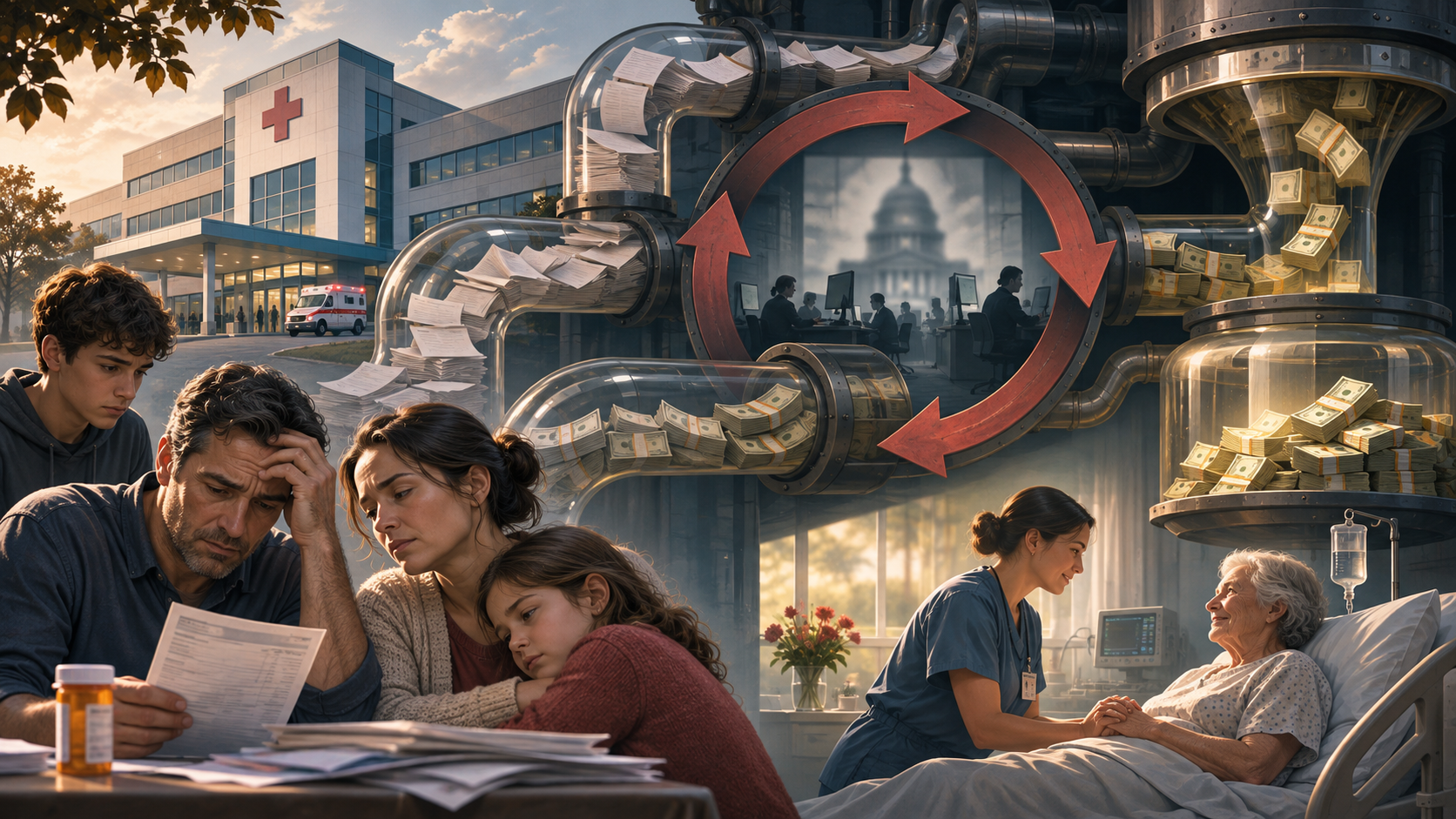
Healthcare is the clearest example of what happens when government preserves an expensive system that enriches those who finance our government instead of reforming it.
The government’s default is to preserve the existing structure and pay more of our money to keep it going. The same pattern applies to tax cuts, war and education: rather than change how the system works, Washington preserves the system in exchange for campaign. Finance payoffs from the legacy systems and then borrows, runs deficits and turns to money printing.
This creates inflation as the tax to pay for all of it. Inflation makes that transfer hard to see. The protected interests get paid huge sums now, while the bill is spread across millions of people—often thousands of miles away—who may not feel its full cost for five or ten years. By then, the connection between the people who benefited and the people paying has disappeared. That distance is what makes inflation such an effective and sinister way to pass the cost to the public.
Prices rise faster than many people’s wages, taking purchasing power from workers and families. That is a tax on the poor and middle class. People with wealth and appreciating assets are better positioned to protect themselves.
Healthcare could deliver better outcomes for less money. But that means challenging the interests embedded in the system, measuring value by the health people receive, and directing investment toward better care instead of higher charges. A tax code could reward those outcomes and make productive investment more valuable than extraction.
That requires a government people trust. Without transparency and reform, each new healthcare promise becomes another payment to the old system—and another round of borrowing and inflation. The public pays for the system’s refusal to change, while the few who benefit from its structure keep their advantage.
Receive the next essay.
Receive Dylan's essays and occasional updates by email. Free. Delivered through Substack.
Form not appearing? Subscribe securely on Substack.
By subscribing, you agree to receive emails from Dylan Ratigan through Substack. Unsubscribe at any time.